
Pokemon Champions finally gave me a reason to try competitive Pokemon.
I’ve been a Pokemon fan for years, but one thing always stopped me from getting into competitive battles: the preparation. Breeding Pokemon, training EVs, finding the right movesets, and building teams felt like a whole chore of its own.
Pokemon Champions changes that. Instead of spending hours preparing Pokemon, you can jump straight into battles and focus on learning the game itself.
The problem?
I quickly discovered that competitive Pokemon is very different from the story mode battles I grew up with.
After getting completely outplayed, making questionable decisions, and learning a few lessons the hard way, here are five beginner mistakes I made in Pokemon Champions that new players should avoid.
- Going Full Offense
- Ignoring Held Items
- Not Understanding Typing
- Only Focusing on Power, Not Accuracy
- Not Understanding Moves
Going Full Offense

Wait a minute, isn’t Pokemon battling about taking down the opponents to 0 HP?
Well, yes. But after jumping into Pokemon Champions, I quickly learned that not every turn should be spent clicking your strongest attack.
When I first started building teams, almost every Pokémon had four damaging moves. More damage meant more options, right?
Not exactly.
Some of the most useful moves in Pokemon Champions don’t deal damage at all. Moves like Protect can block an entire turn of attacks, Tailwind can make your whole team move first, and Fake Out can stop an opponent from acting altogether.
There are also turns where attacking simply isn’t the best play. Maybe your opponent is likely to target a specific Pokémon, so using Protect keeps it alive for another turn. Maybe you need to stall out an opposing Tailwind. Maybe setting up your own speed control will help you secure knockouts later.
Think of it this way: attacking wins battles, but support moves help create the opportunities to attack safely.
If you’re new to Pokemon Champions, don’t fall into the trap of giving every Pokémon four attacking moves. Sometimes the move that deals zero damage ends up being the move that wins the game.
Ignoring Held Items
If you’re coming from the main Pokemon games, it’s easy to overlook held items.
After all, your Pokemon already has its moves, stats, and typing. How much difference can one item really make?
As it turns out, quite a lot.
When I first started playing Pokemon Champions, I spent most of my time looking at movesets and team composition. Held items were something I equipped because a guide told me to, not because I understood what they did.
The reality is that held items can completely change how a Pokemon performs in battle.
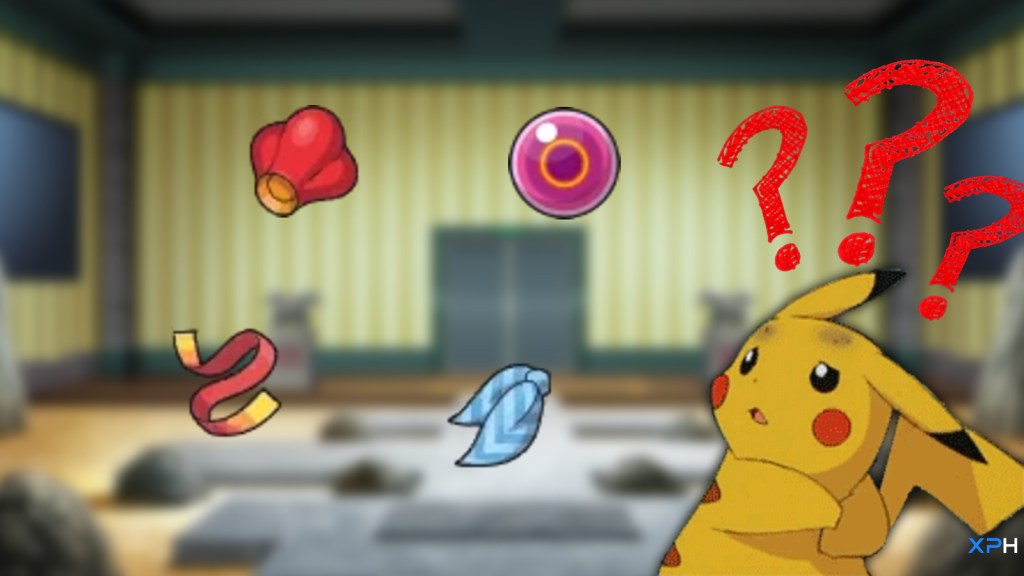
A Focus Sash can let a fragile Pokemon survive a hit that would normally knock it out. A Sitrus Berry can restore health at a crucial moment. A Choice Scarf can allow a Pokemon to outspeed threats it normally couldn’t. Even a simple Leftovers can add up over the course of a longer battle.
Many beginners focus on finding stronger Pokemon, when sometimes the biggest improvement comes from giving the right Pokemon the right item.
Before jumping into a match, take a few moments to read what your held items actually do. Understanding your items won’t instantly make you a better player, but it can help you understand why your Pokemon survives, outspeeds, or deals more damage than expected.
In Pokemon Champions, items aren’t just extra bonuses. They’re part of your Pokemon’s strategy.
Not Understanding Typing
Pokemon Champions can be overwhelming when there are hundreds of Pokemon available, each with different typings (combinations of typings, even!), abilities, and moves.
As a beginner, it’s tempting to focus on your own Pokemon. You know what moves they have, how much damage they can deal, and what strategy you’re trying to execute.
The problem is that your opponent has a plan too.
One of the fastest ways to lose a battle is by ignoring type matchups. A powerful attack can suddenly do almost no damage if the target resists it, while a super effective move can knock out a Pokemon much faster than expected.
This becomes even more important when you start facing Pokemon with two types. A Pokemon might be weak to one attack, resist another, and be completely immune to a third.
Understanding typing isn’t just about attacking. It’s also about protecting your own team. Before bringing a Pokemon onto the field, ask yourself what attacks your opponent is likely to use and whether your Pokemon can safely take those hits.
The good news is that nobody memorizes every matchup overnight. Learning typings comes with experience. If you find yourself repeatedly losing to a particular Pokemon, take a moment to check its typing and weaknesses after the battle. Over time, recognizing threats and opportunities becomes second nature.
In Pokemon Champions, knowing your type matchups can often be the difference between winning a close battle and wondering why your strongest attack barely scratched the opponent.
Only Focusing on Power, Not Accuracy

When choosing moves, it’s natural to look at the power stat first.
After all, why use a move with 80 power when another move has 120 power?
The catch is that stronger moves often come with lower accuracy.
Many beginners fall into the trap of picking the strongest attack available without considering how often it will actually hit. Missing an attack doesn’t just mean dealing less damage. It can completely change the outcome of a battle.
Imagine your Pokemon needs to land one attack to secure a knockout, but your move only has 70% accuracy. If it misses, your opponent gets a free turn to attack, switch, or set up. Suddenly, that extra power doesn’t look so appealing.
This doesn’t mean low-accuracy moves are always bad. Powerful attacks like Fire Blast, Hydro Pump, Stone Edge, and Hurricane can be worth the risk in certain situations. The important thing is understanding that there is a trade-off.
Some of the low-accuracy moves can even become 100% accurate moves in certain conditions. For example, Thunder and Hurricane in Rain, and Blizzard in Snow.
As a beginner, it is often better to use consistent moves that hit reliably. A move that deals slightly less damage but lands every turn can be more valuable than a stronger move that misses at the worst possible moment.
Before adding a move to your team, don’t just look at its power. Take a look at its accuracy as well. Future you will be much less frustrated when your Pokemon actually lands the attack you need.
Not Understanding Moves

With hundreds of moves available in Pokemon Champions, it’s easy to assume that a move simply does what its type and power suggest.
Unfortunately, Pokemon isn’t always that straightforward.
Many moves have additional effects, targeting rules, or special conditions that aren’t obvious at first glance. Some attacks can hit multiple Pokemon on the field, including your own teammates. Others only work under certain conditions or have hidden drawbacks.
For example, Fake Out can only be used successfully on the first turn a Pokemon enters the field. Protect blocks most attacks, but repeated use becomes less reliable. Earthquake and Sludge Wave are powerful spread moves, but they can also damage your partner Pokemon in doubles battles. I’ve seen a couple of battles where the opponent knocks out their own Pokemon by mistake this way!
As a beginner, it’s completely normal to focus on a move’s type and power. However, taking a few extra seconds to read a move’s description can prevent costly mistakes and help you discover useful strategies.
The same move can also be used very differently depending on the situation. A move that looks weak on paper may become incredibly valuable when combined with the right teammate, item, or battle plan.
If a move surprises you during a battle, don’t immediately move on to the next match. Take a moment to look it up and understand what happened. Over time, you’ll build a much better understanding of how battles work and become less likely to be caught off guard.
In Pokemon Champions, knowing what a move does is often just as important as knowing how much damage it deals.


Leave a Reply